
Concrete flooring provides a durable foundation for a wide range of residential, commercial, and industrial spaces, but the appearance and performance of the finished surface depend on how the concrete is treated. Polishing transforms an existing concrete slab through a series of mechanical grinding and refinement stages, creating a surface that can range from a low sheen to a high gloss. Rather than covering the concrete with a separate flooring material, the process works with the slab itself. The final result depends on the concrete’s original condition, the desired appearance, and how carefully each stage is carried out.
The condition of the concrete plays an important role in determining the polishing approach. Cracks, uneven areas, old coatings, adhesive residue, and previous repairs may need attention before grinding begins. Contractors also need to consider the desired level of aggregate exposure, since deeper grinding can reveal more of the coarse aggregate within the concrete and change the floor’s overall appearance. These decisions affect the amount of material removed and the sequence of work required. A floor intended for a retail space, for example, may have different aesthetic requirements from one in a warehouse where durability and ease of maintenance are major priorities.
Once the surface is prepared, diamond abrasives are used to grind the concrete and progressively refine the scratches left by earlier stages. Concrete metal bond diamond heads are commonly used during the initial grinding stages, while finer abrasives help develop a more refined surface. The transition between stages matters because moving to a finer grit before the previous scratch pattern has been adequately removed can leave visible marks in the finished floor. Depending on the polishing system and the required finish, contractors may use 3 step polishing pads during later stages. Tool selection, grit progression, machine settings, and consistent coverage all contribute to the final appearance.
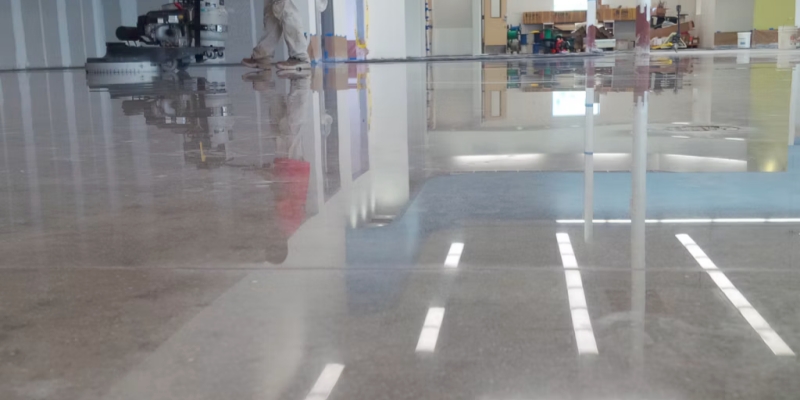
Polishing is not simply a matter of making concrete shiny. During the process, a compatible concrete densifier may be applied to help harden and densify the surface, following the product manufacturer’s instructions and the requirements of the chosen polishing system. Further refinement then develops the intended level of clarity and gloss. Phenolic flexible polishing pad can be useful for particular applications where the tooling design suits the surface and polishing stage, but no single pad type is appropriate for every floor. The goal is to match the abrasive sequence and process to the concrete rather than pursue the highest possible gloss regardless of the building’s needs.
When concrete flooring and polishing are planned together, the result can be a durable, attractive surface that is relatively straightforward to maintain. Polished concrete is used in showrooms, offices, retail spaces, warehouses, and other settings, with the appropriate finish depending on traffic, lighting, cleaning practices, and the condition of the slab. TransGrind supplies diamond tooling for concrete grinding and polishing applications, helping contractors select tools suited to different stages of surface preparation and refinement. Regardless of the tooling selected, successful results depend on assessing the concrete carefully, following a suitable grinding sequence, and maintaining the floor with compatible cleaning products. A well-executed process brings out the qualities of the concrete while delivering a finish that meets the practical demands of the space.

 IPv6 réseau pris en charge
 English
 français
 Deutsch
 русский
 italiano
 español
 português
 العربية
 日本語
 Polski
 中文